
Copenhagen - Two Days in August
Copenhagen, two days in August. On Saturday, a walk of an hour and a half in the long evening light, from the meadows at the edge of the city to Nyhavn, by way of Christiania. On Sunday, a whole day, from the morning metro to the faces of the afternoon. Two ways of seeing the same city: when it slows down, and when it comes out.
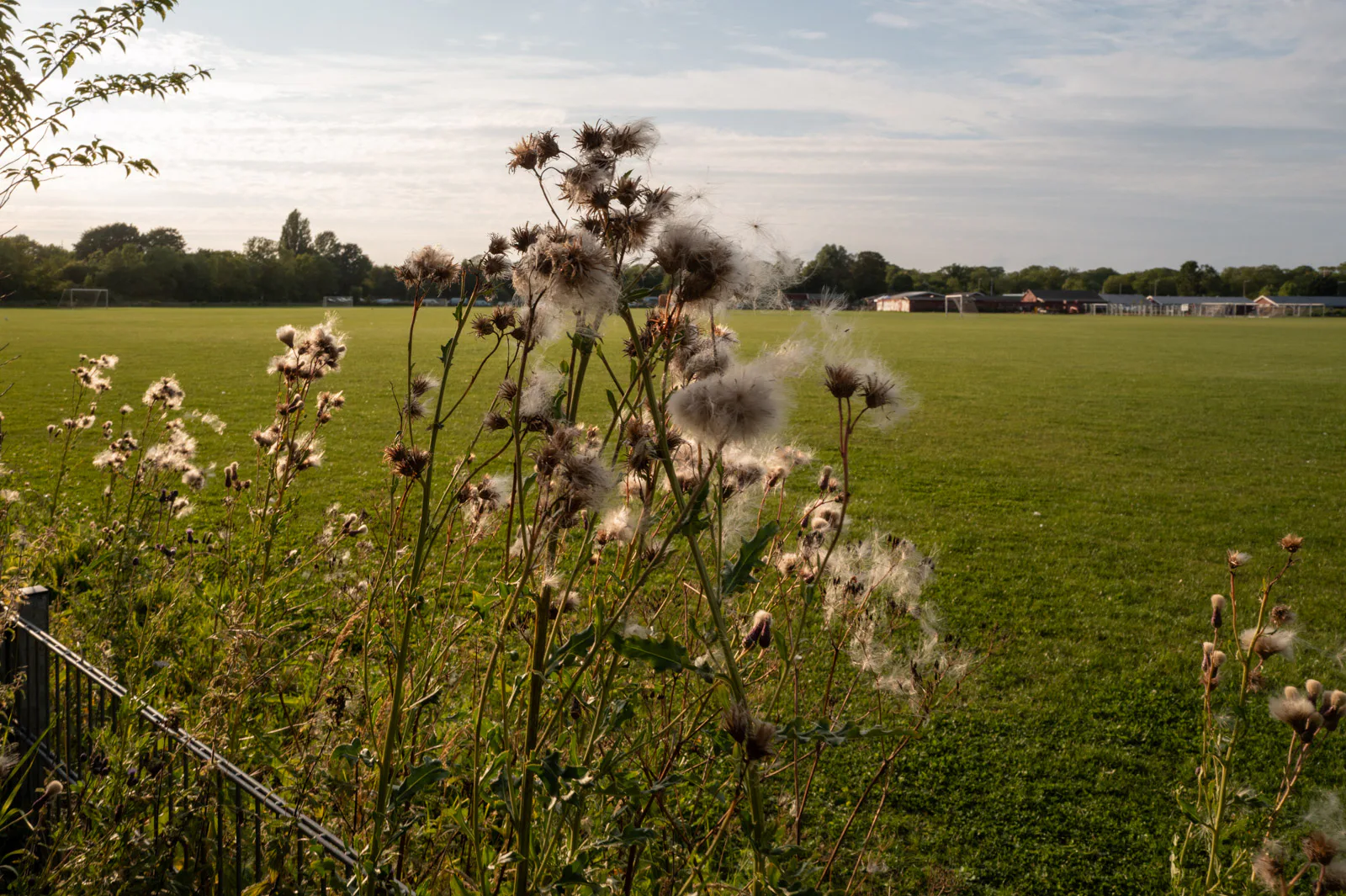
The meadows at the edge of the city.
At first, almost the countryside. Thistles gone to seed, a huge playing field under a mackerel sky, chimneys in the distance as a reminder that the city is close. A man waits on a graffitied bench, a couple sits by a lake. Copenhagen starts by taking a breath.
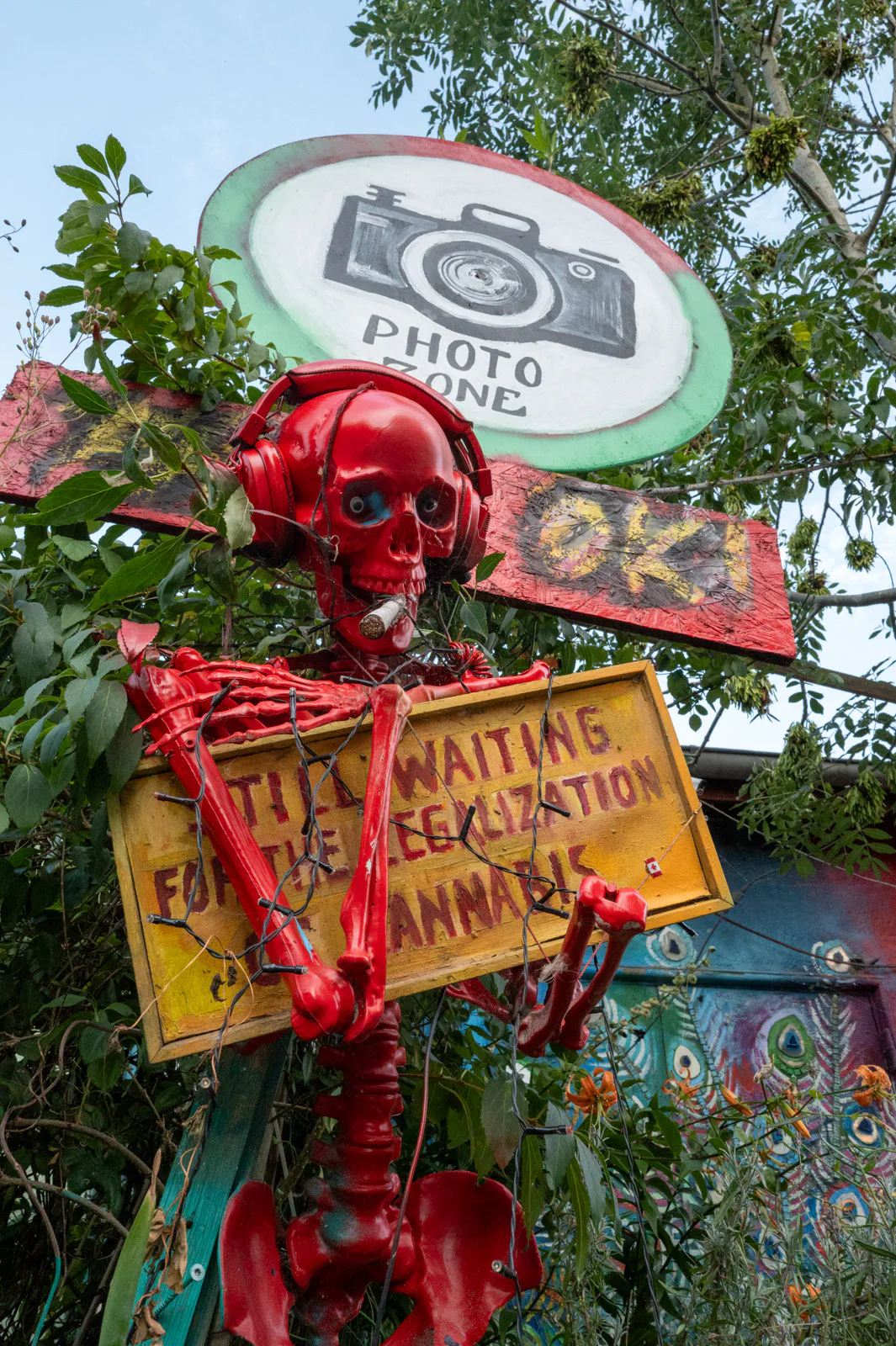
Christiania, the free town.
Then Christiania, the self-governing neighbourhood set up in 1971 in former military barracks. Here everything is salvaged and everything is decorated: painted shields beneath an upturned boat, a doll’s head in a birdhouse, shoes hanging from a cable, a plane perched above a house. A red skeleton is still waiting for cannabis to be legalised, under a “Photo zone” sign: in the free town, the camera does not come out just anywhere.
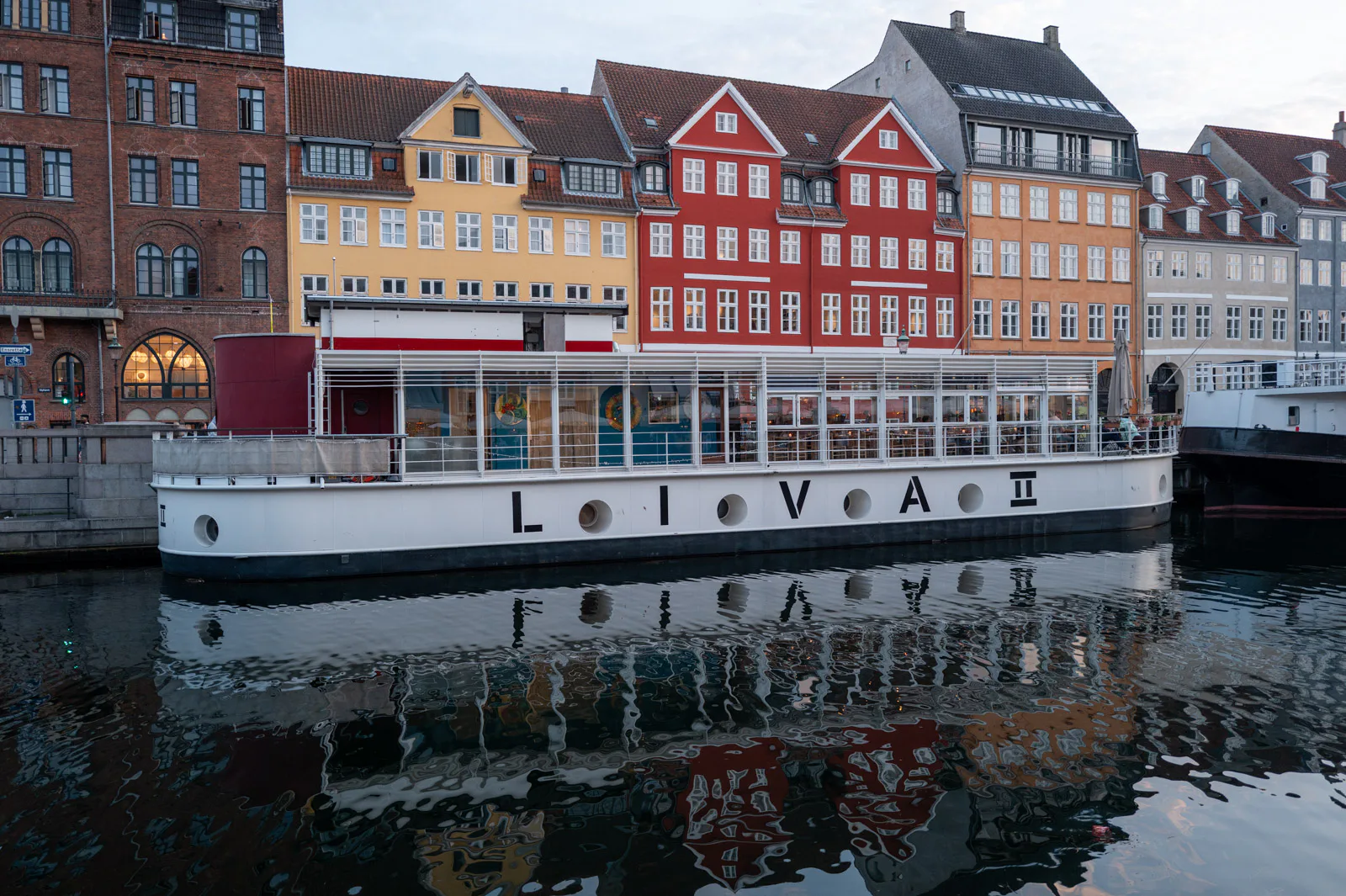
From the canals to Nyhavn.
On the way out, the water takes over again. A green rowing boat sleeps on a canal lined with reeds, young people sit on the edge of the quays in front of the old warehouses, an empty bottle ends its evening on the cobbles. The walk ends where everyone ends up: in Nyhavn, as the yellow, red and blue facades are reflected in the canal and the crowd passes beneath a sign that simply says “Pissoir”.
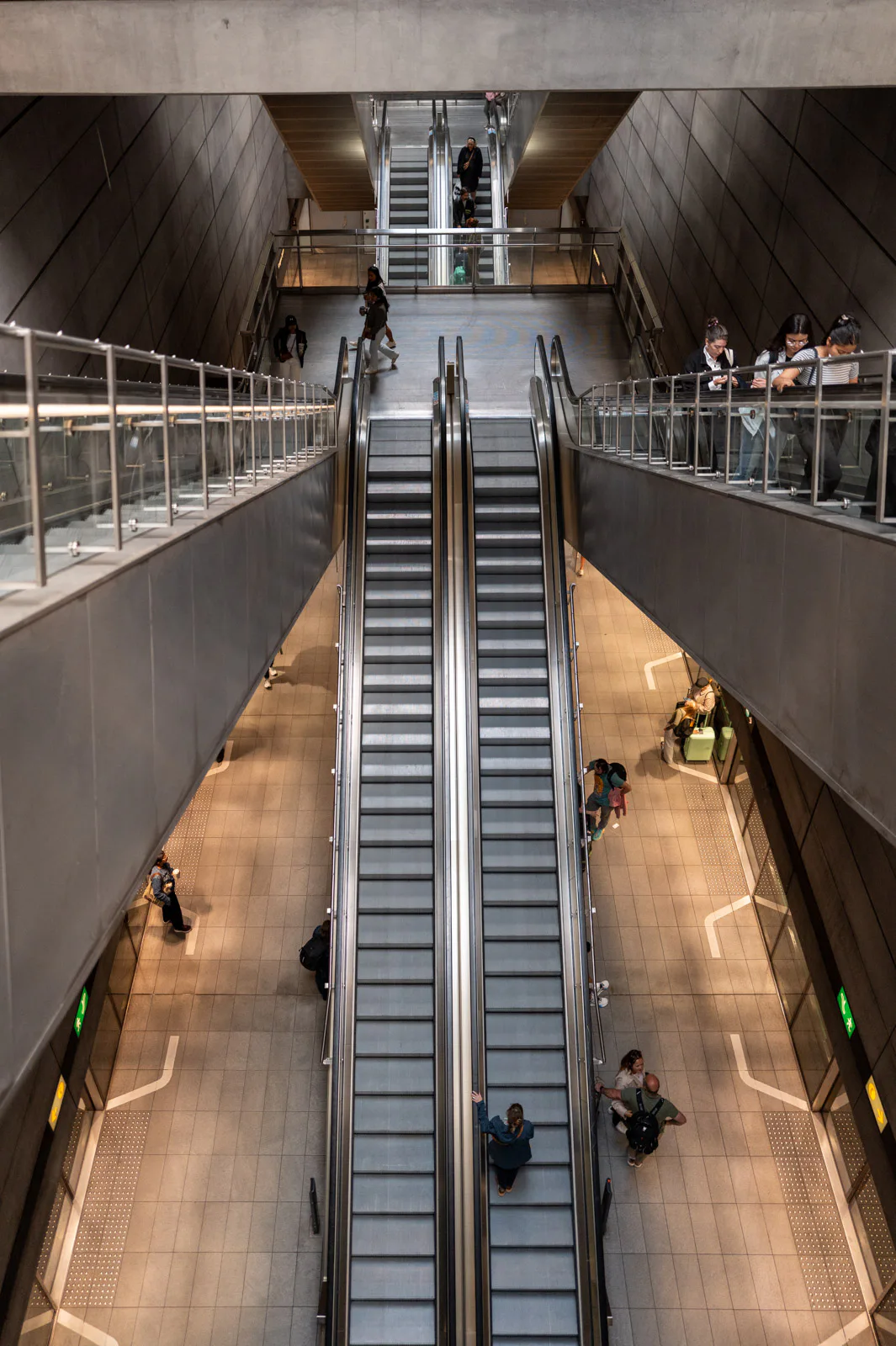
Sunday morning, underground.
The next day begins in the metro. Two uniformed officers in an almost empty carriage, passengers still half asleep, skylights cut into the ceilings of the stations, escalators climbing back towards the daylight. Above ground, the green dome of the Marble Church waits at the end of the street.
The Kastellet and the harbour.
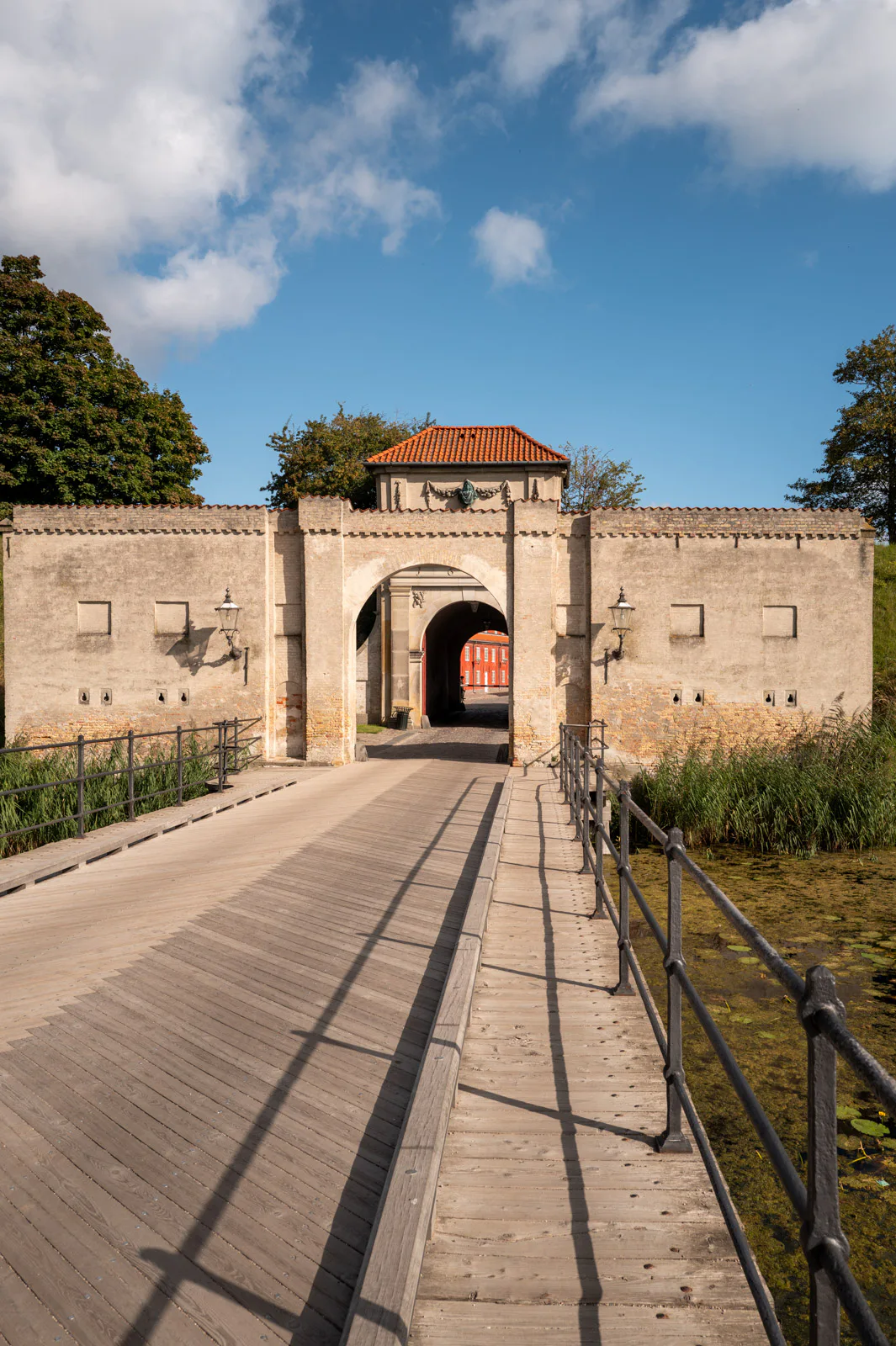
Further north, the Kastellet, the star-shaped citadel, sleeps behind its moats. A runner passes a statue, the Danish flag flies over the red barracks, two cannons guard a yellow house. Then the harbour: the Little Mermaid on her rock, the Gefion Fountain and its oxen in front of St. Alban’s Church, and across the water, the Opera House. On a wooden deck, people swim right in the harbour.
The centre in broad daylight.
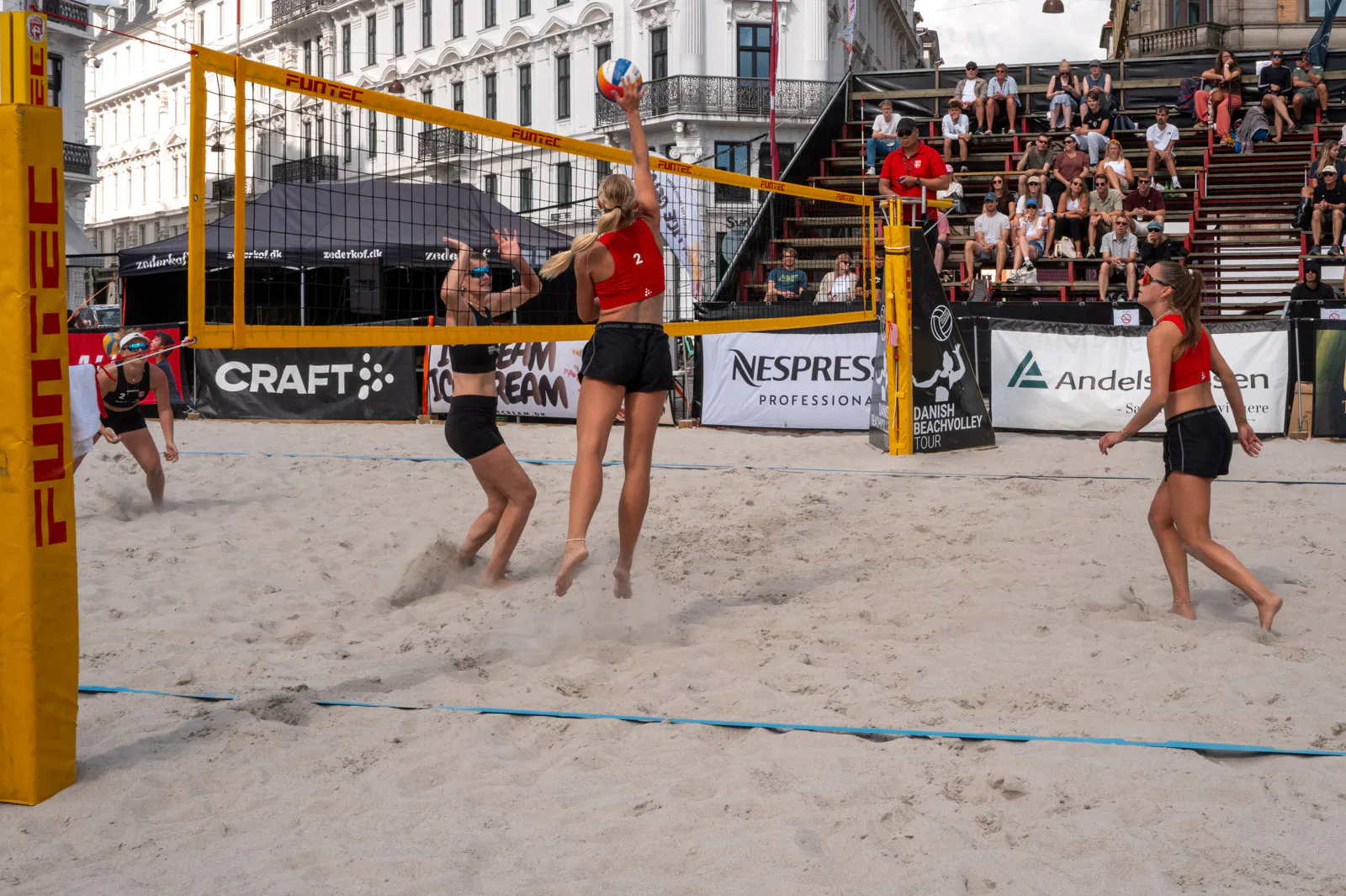
By late morning, the centre fills up. Two young women roll by on rollerblades, a beach volleyball tournament has dropped its sand in the middle of the city, bicycles cross at the lights. On the pedestrian street, two musicians play in front of the Church of the Holy Spirit, an old man rests on a bench, and shadows carve up the facades.
Faces of the afternoon.
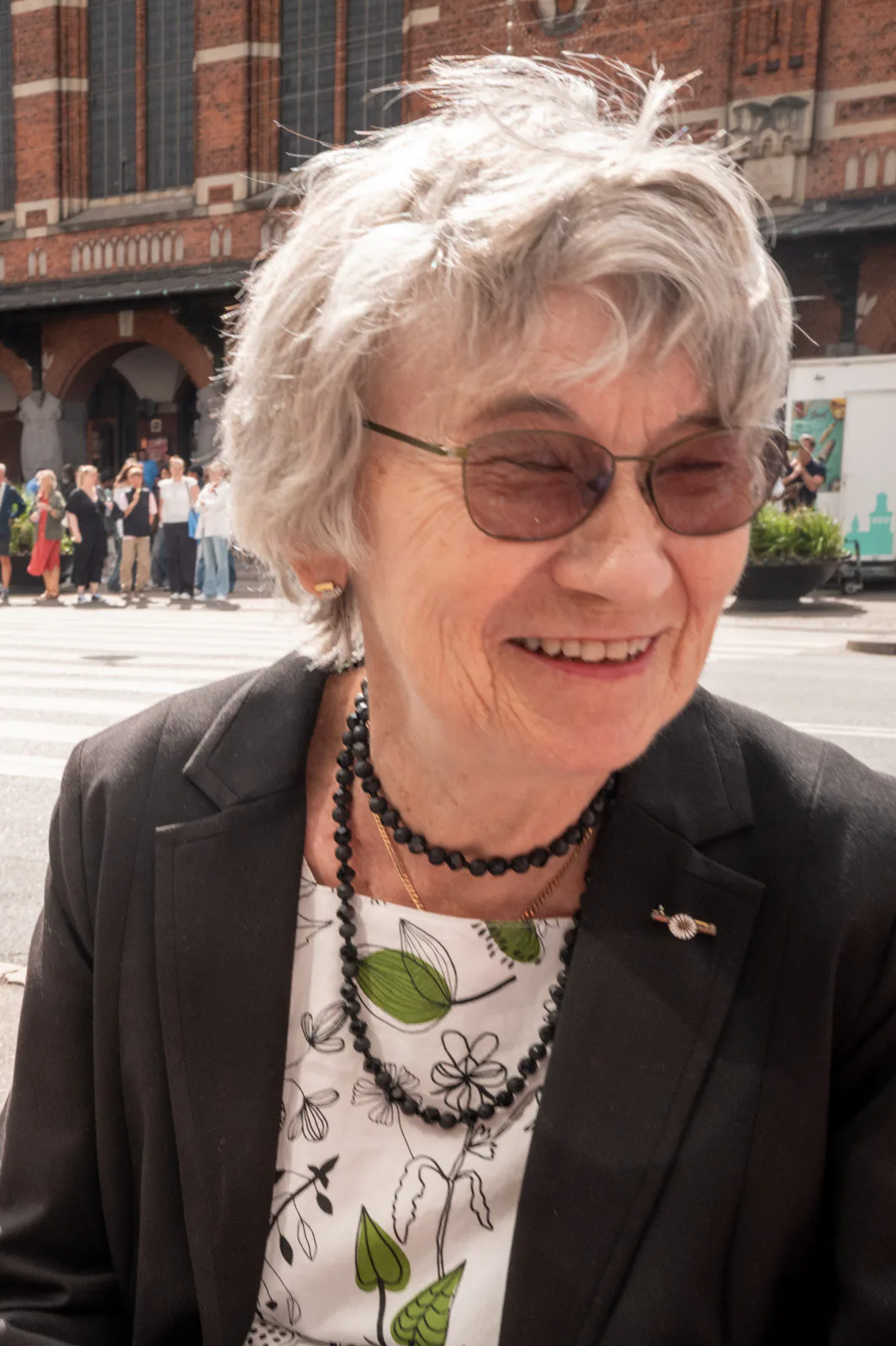
In the afternoon, I moved closer to people. A crowd in front of a stage set up facing the City Hall, a woman smoking on a box, a lady bursting into laughter behind tinted glasses, a passer-by whose T-shirt confesses “Dramatic overthinker”, a couple unfolding a jacket at the edge of the pavement. Seen up close, Copenhagen has open faces.