
Edinburgh - Dark Stone, Shifting Skies
Edinburgh reads in black and white. The stone is dark, blackened by centuries of coal smoke that earned the city its old nickname, Auld Reekie. Between the Old Town perched on its rock and the straight streets of the New Town, the sky changes every ten minutes, and the light with it.
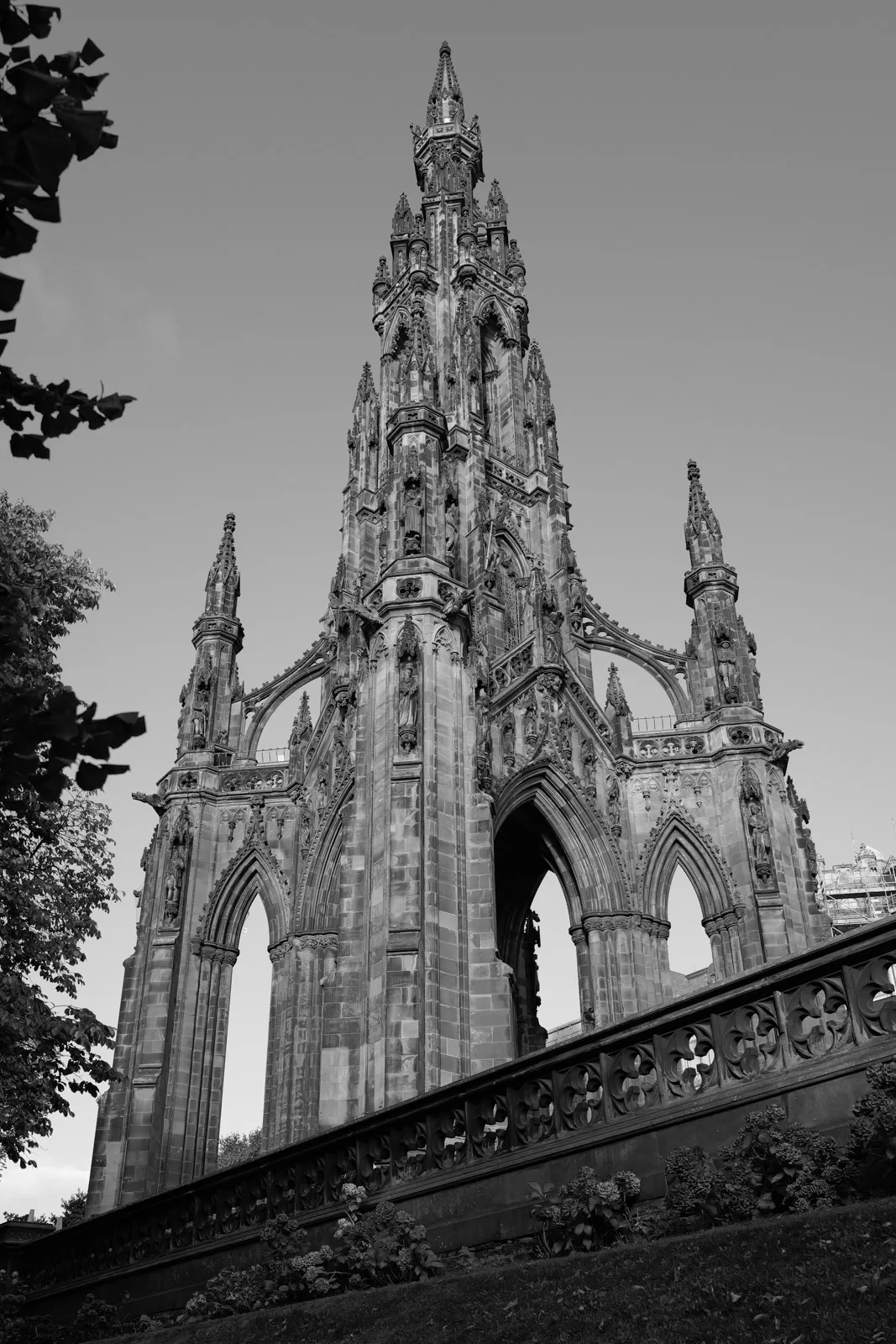
Blackened stone.
In the middle of the gardens, the Scott Monument raises its Gothic spires like a cathedral without a nave, built in honour of a writer. At the foot of its balustrades, sketch artists set up their folding stools and spend the afternoon copying every pinnacle. You find it everywhere: between two branches, at the end of a close, through an opening in the stone.

The Royal Mile on stage.
On the Old Town cobbles, everyone plays a part. A young piper in a kilt in front of a carved door, a couple dancing in the middle of the street, protesters raising their placards, old gentlemen soaking up the sun on a terrace. And between the acts, ordinary passers-by, absorbed in their phones, cross the stage without looking at it.
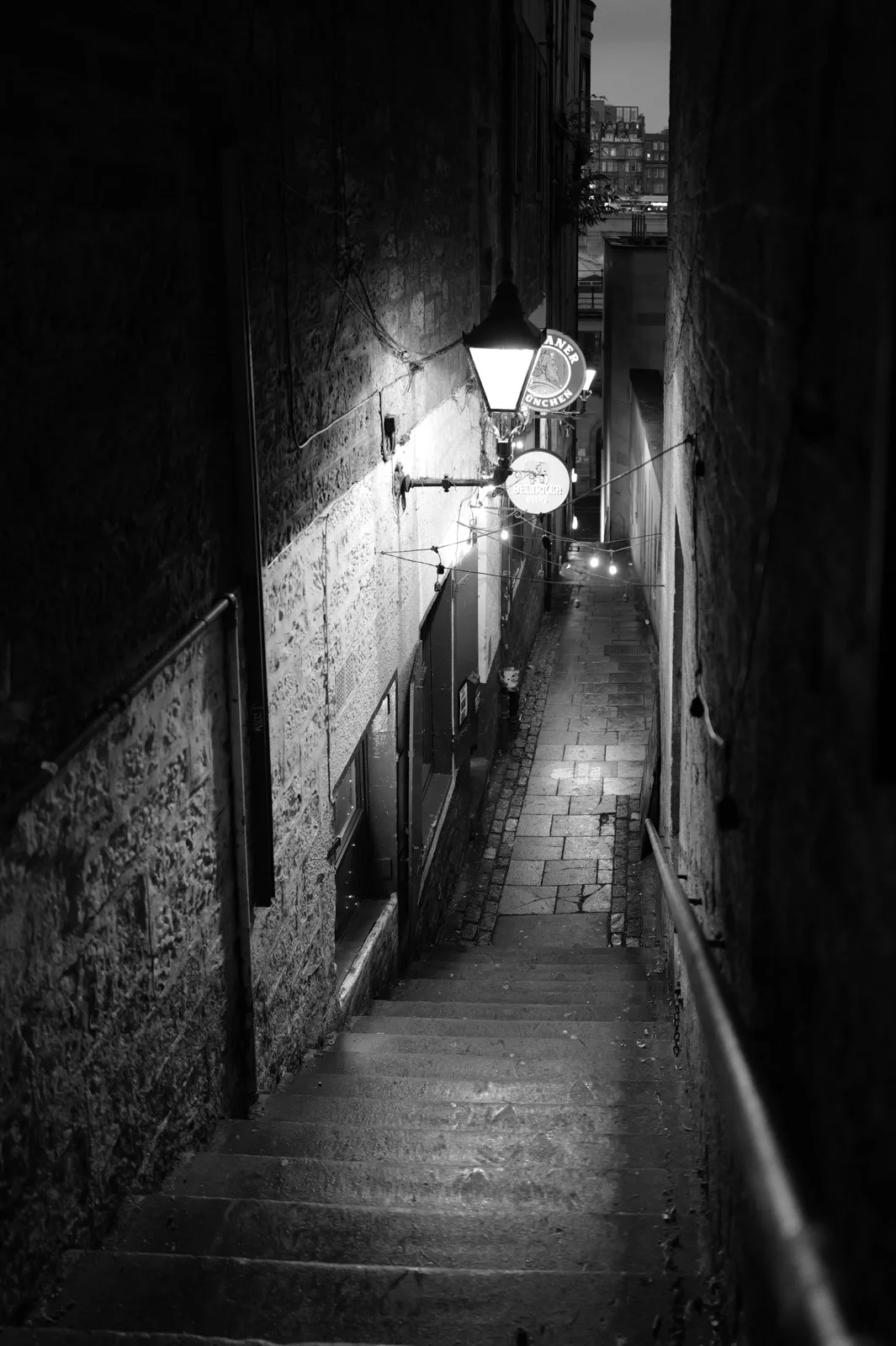
When the city empties.
At night, Edinburgh withdraws into its closes, the stepped lanes that drop between the buildings. Waverley station empties, the cobbled streets keep only their street lamps and bunting, and a statue ends up crowned with traffic cones, as if the city waited for you to turn your back to have a little fun.
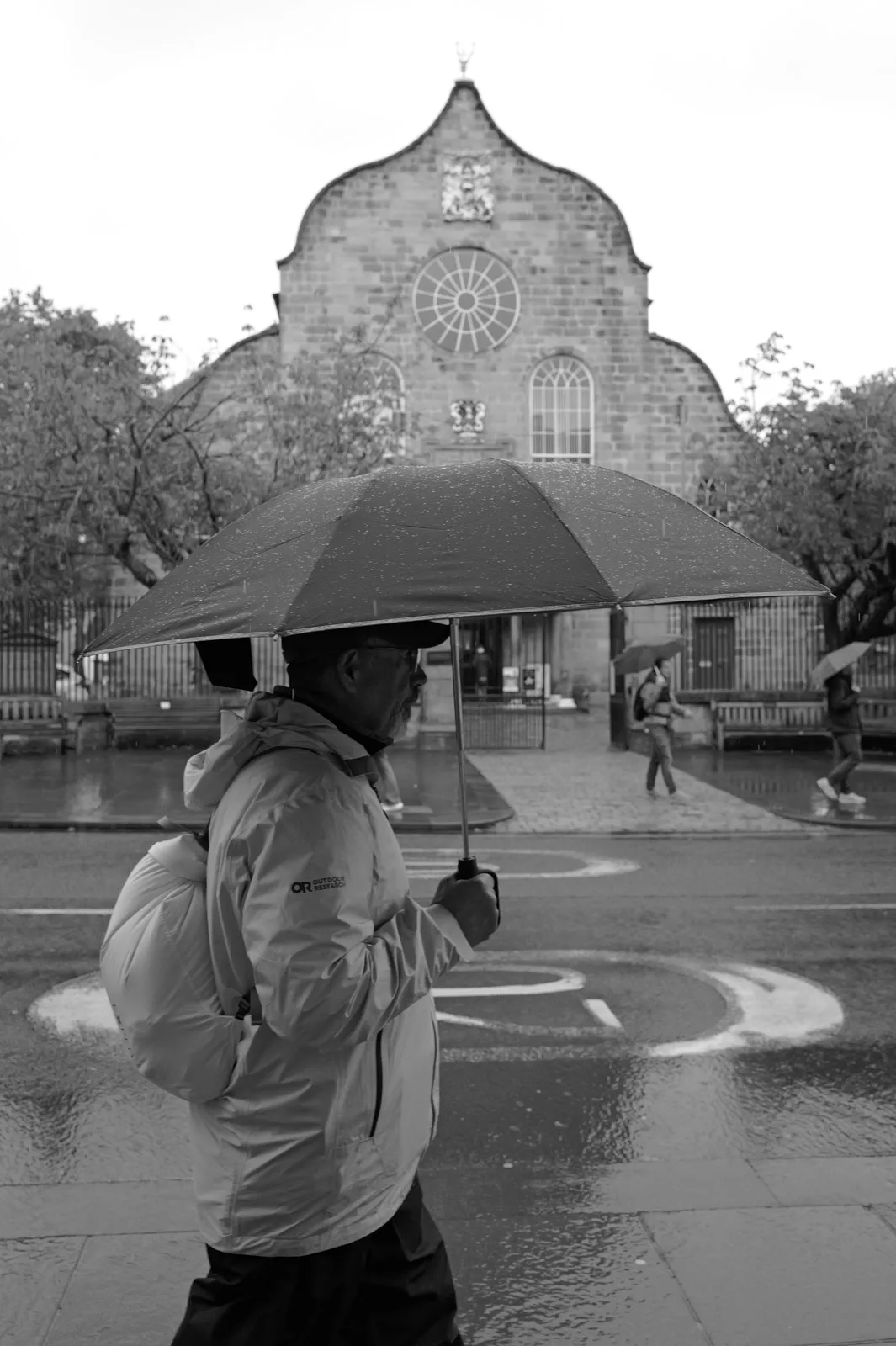
The rain always comes.
And then the sky keeps its promise. Umbrellas open in front of churches, pavements turn into mirrors, rain jackets walk up the street in single file. In Edinburgh, the rain spoils nothing: it is part of the scenery, and the stone never looks better than when it is wet.