
Stavanger - White Houses and Painted Walls
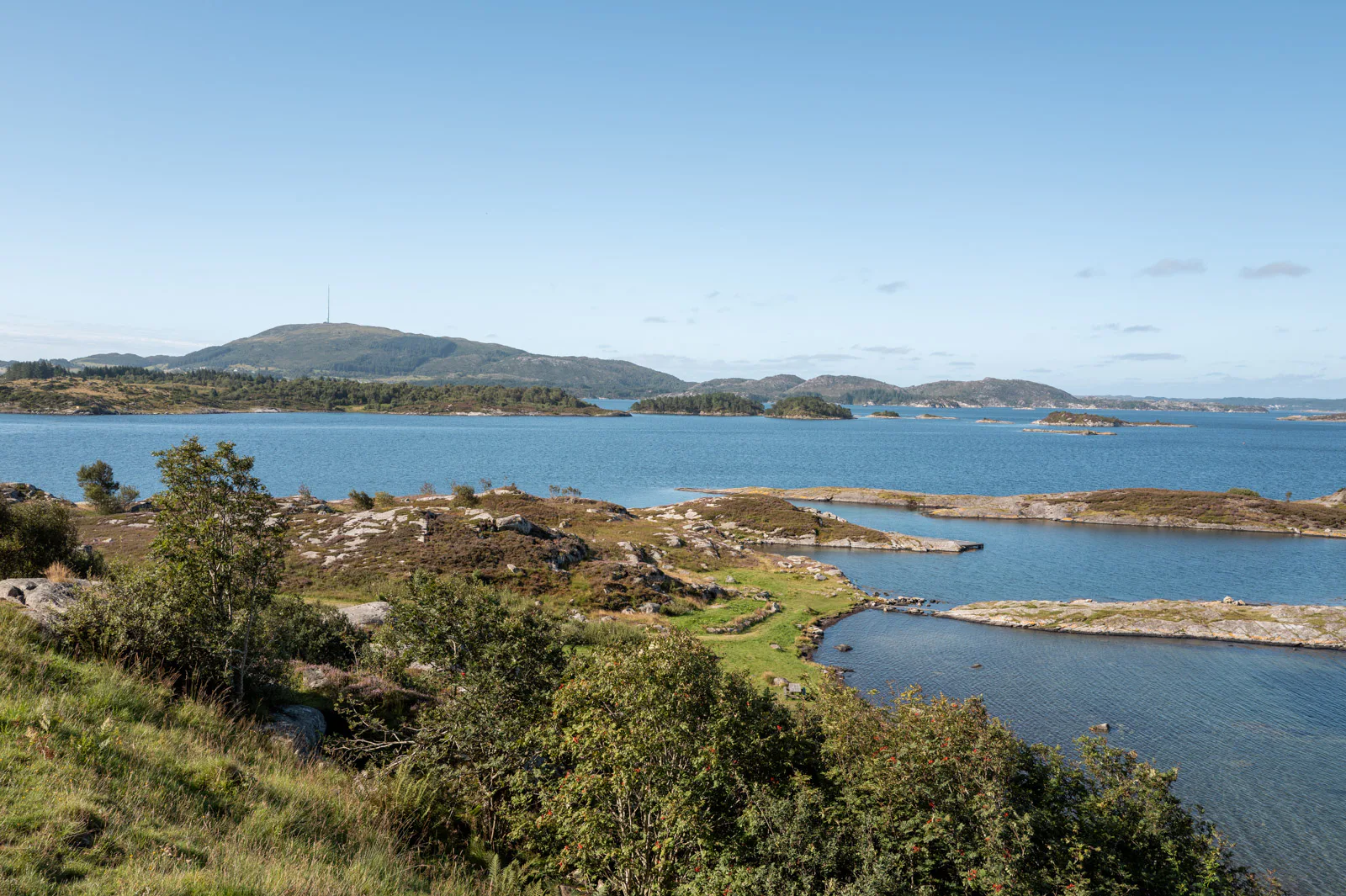
Stavanger, a Wednesday in August, on the south-west coast of Norway, after Bergen. In the morning, islands and coves as far as the eye can see; in the afternoon, a city of white wooden houses, cruise ships and painted walls, all the way to the three swords of the Hafrsfjord.
Walls that talk.
Stavanger hosts a street art festival every year, and its walls tell the story. Round a corner, a stencilled angry child gives the finger, two workers in orange vests climb a wall to reach an air vent. Right next door begin the cobbled lanes and the first white houses.
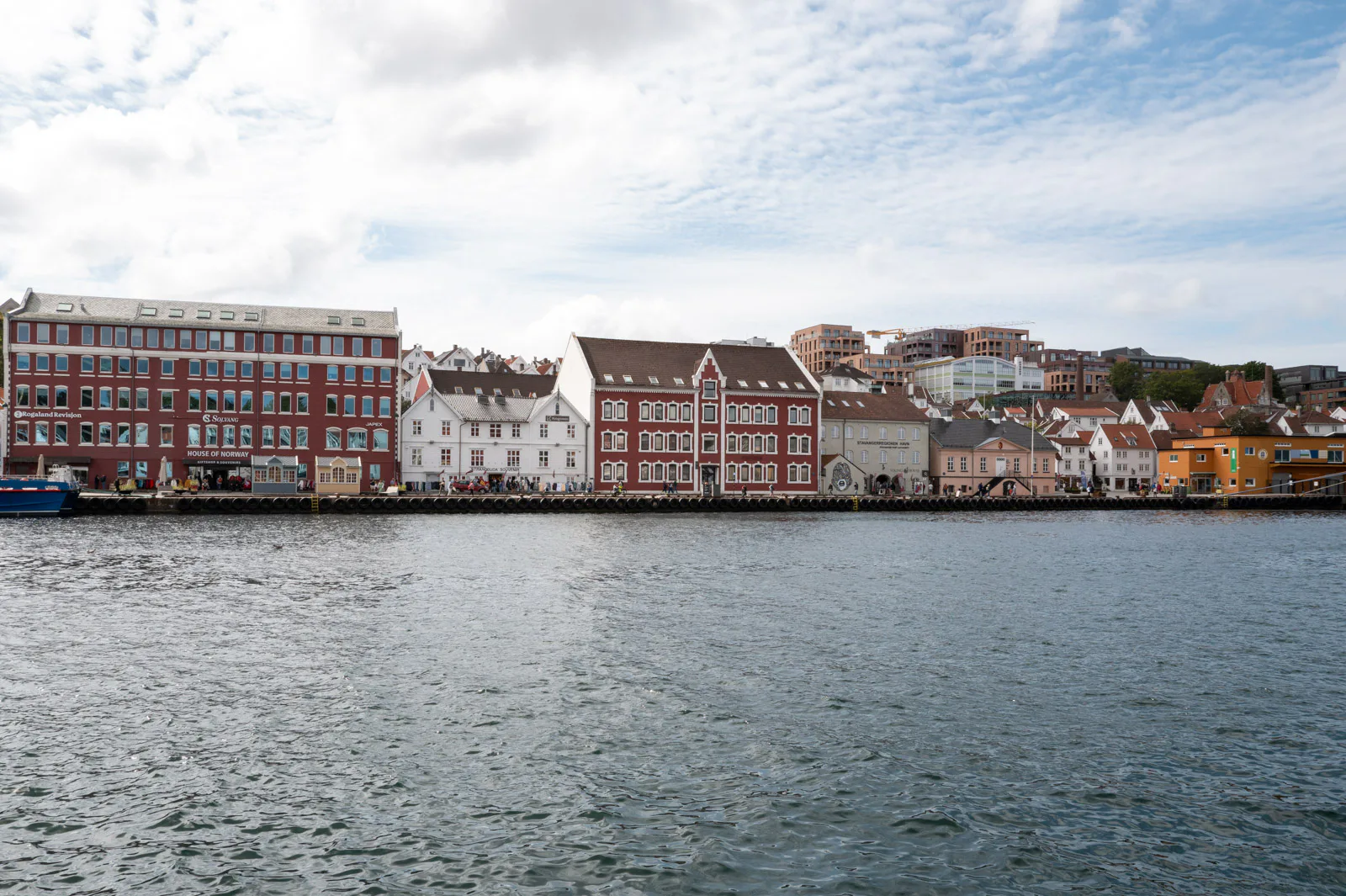
Around the harbour.
On Vågen harbour, the old ship Rogaland pulls at its moorings, facing the brick and wooden facades. On the terraces, people lunch among the plants; on the square, a man in a hat reads his paper, a woman in a yellow jacket takes pictures, two passers-by rest near a horse statue.
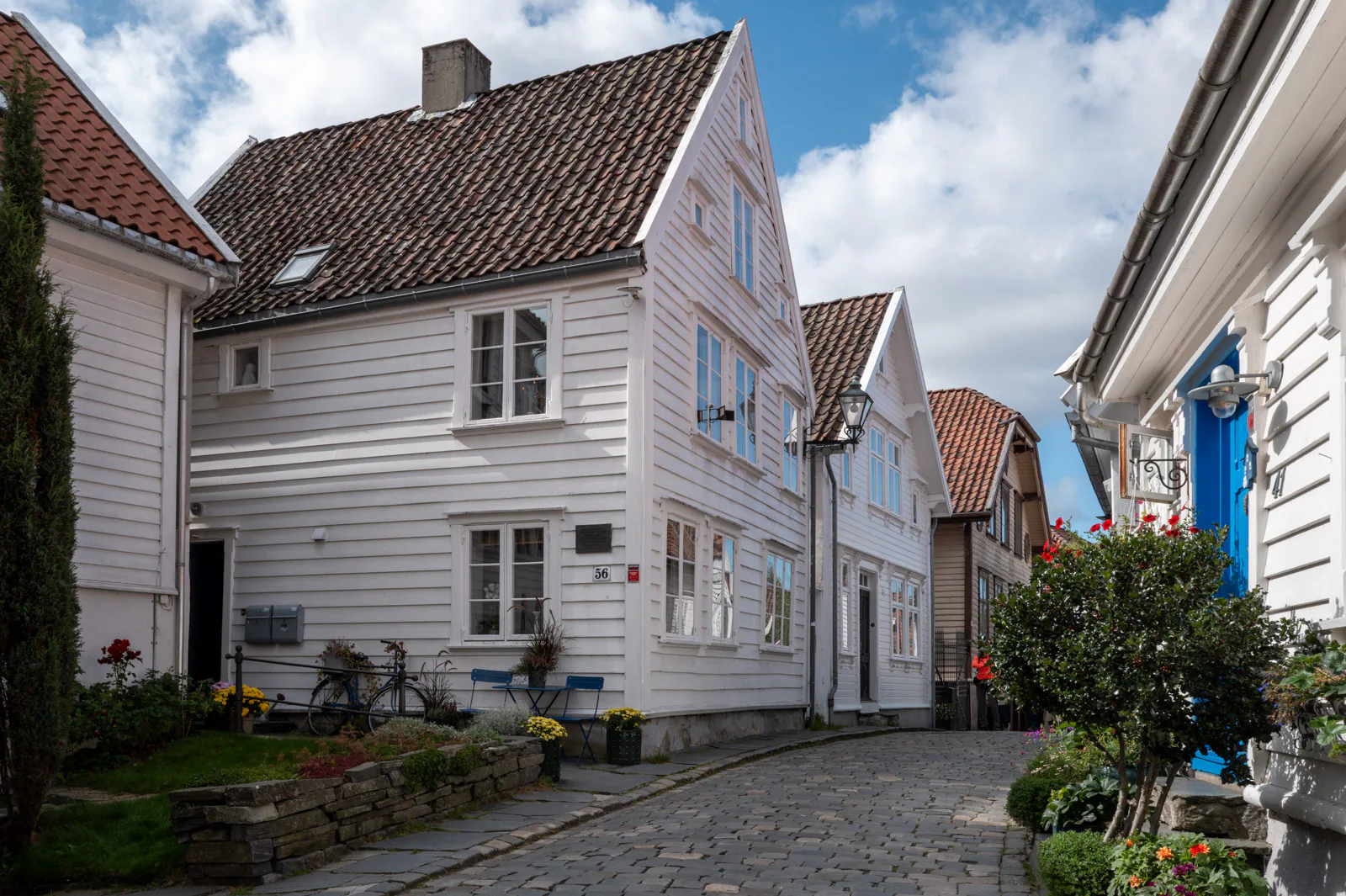
Gamle Stavanger.
Then the old town, Gamle Stavanger, and its white wooden houses packed along the cobbled streets. Blue doors, flowerpots, a cat at the end of a lane, an old man resting with his cane and his camera. Above the roofs, the funnel of a cruise ship is a reminder that the sea is never far.
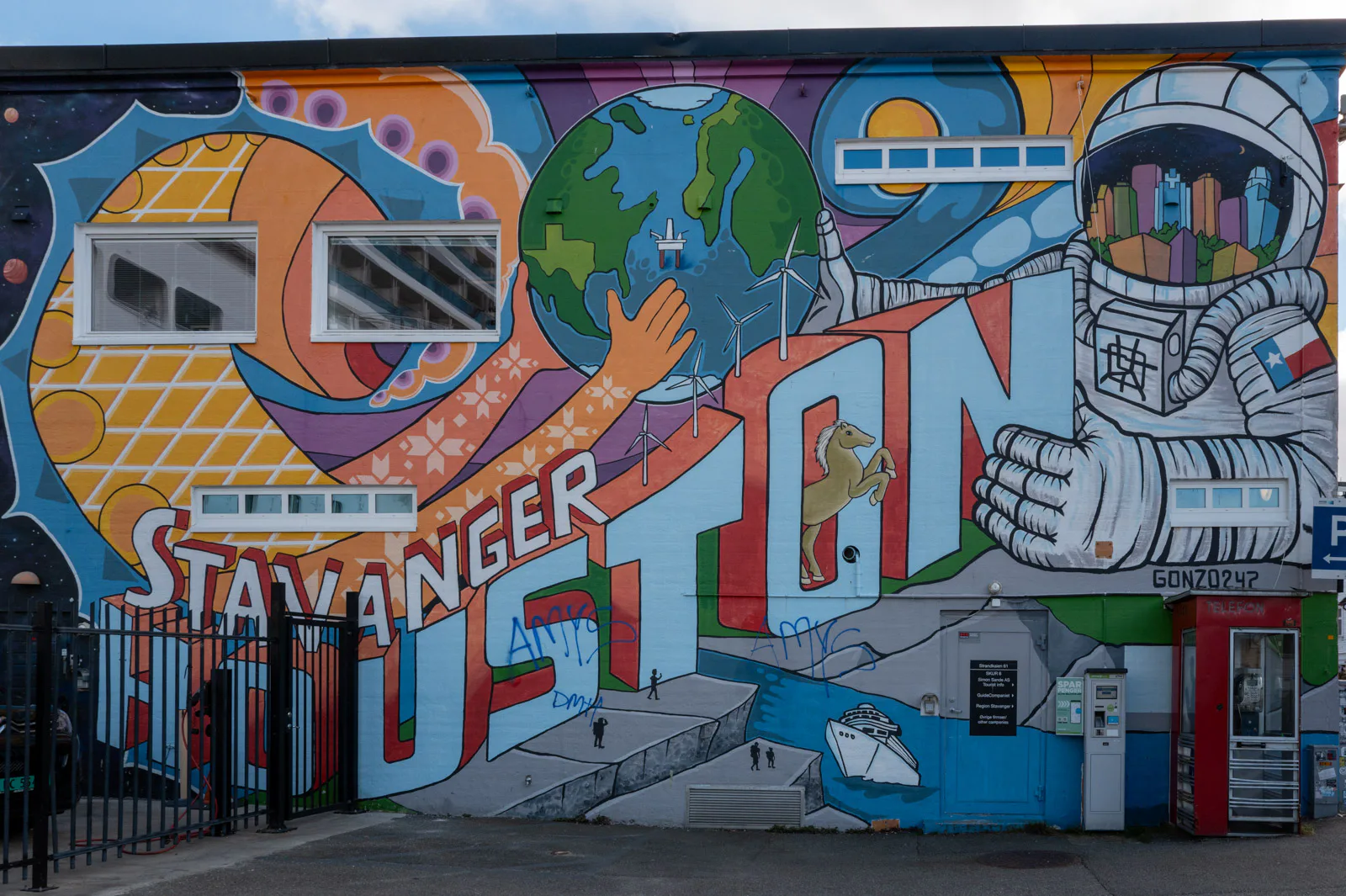
Cruise ships and trolls.
On a wall, a large mural links Stavanger to Houston, the two oil capitals, under the gaze of an astronaut. At the end of the harbour, a cruise ship pours its passengers towards the souvenir shops, where resin trolls stand guard between the clothes racks.
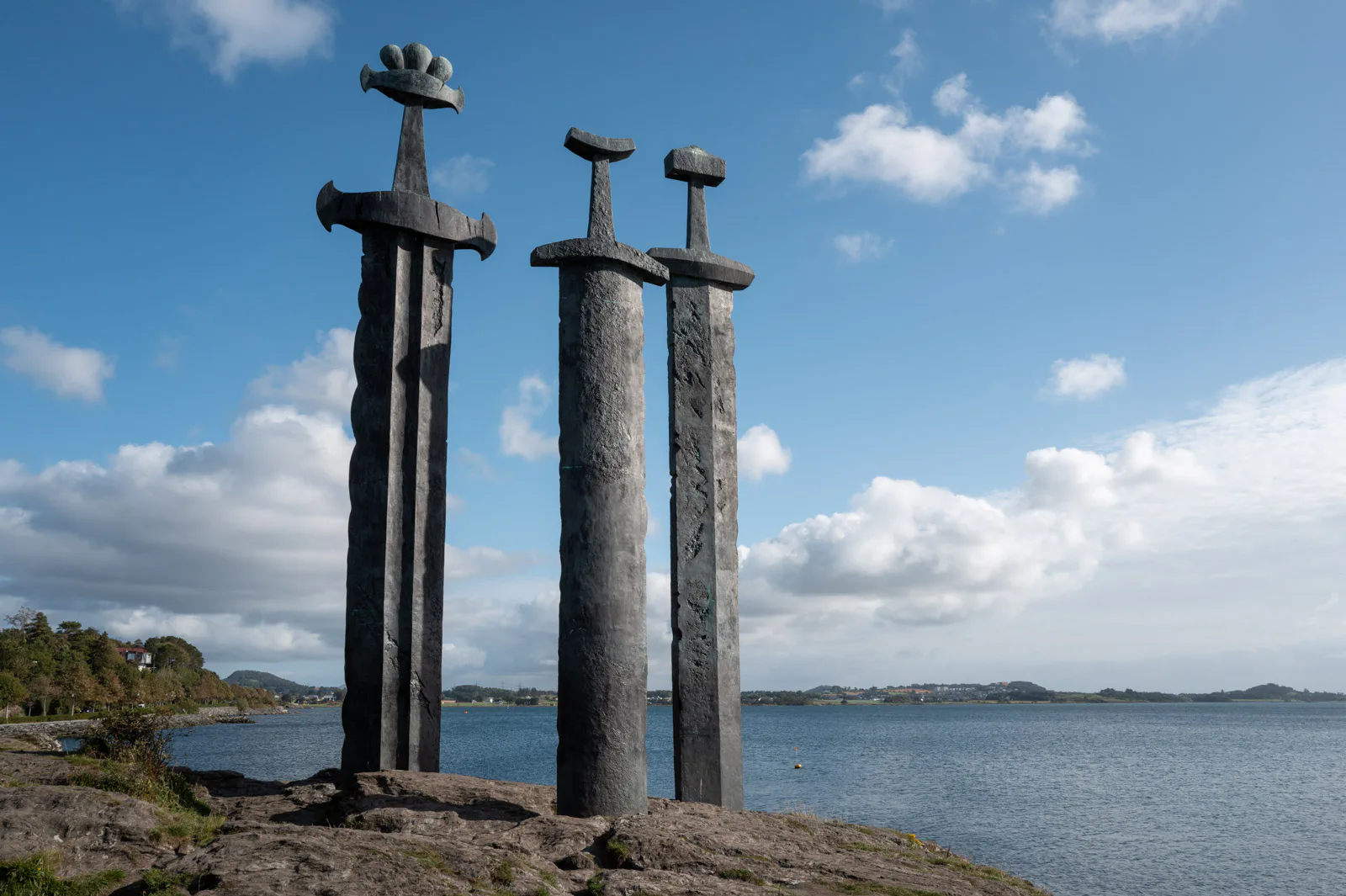
The swords of the Hafrsfjord.
Late in the afternoon, on the shore of the Hafrsfjord, three giant swords stand planted in the rock, in memory of the battle that, according to tradition, unified Norway. Behind them, the sun makes the water of the fjord sparkle.